Beef Tenderloin with Fig Glaze
Highlighted under: Fusion Kitchen
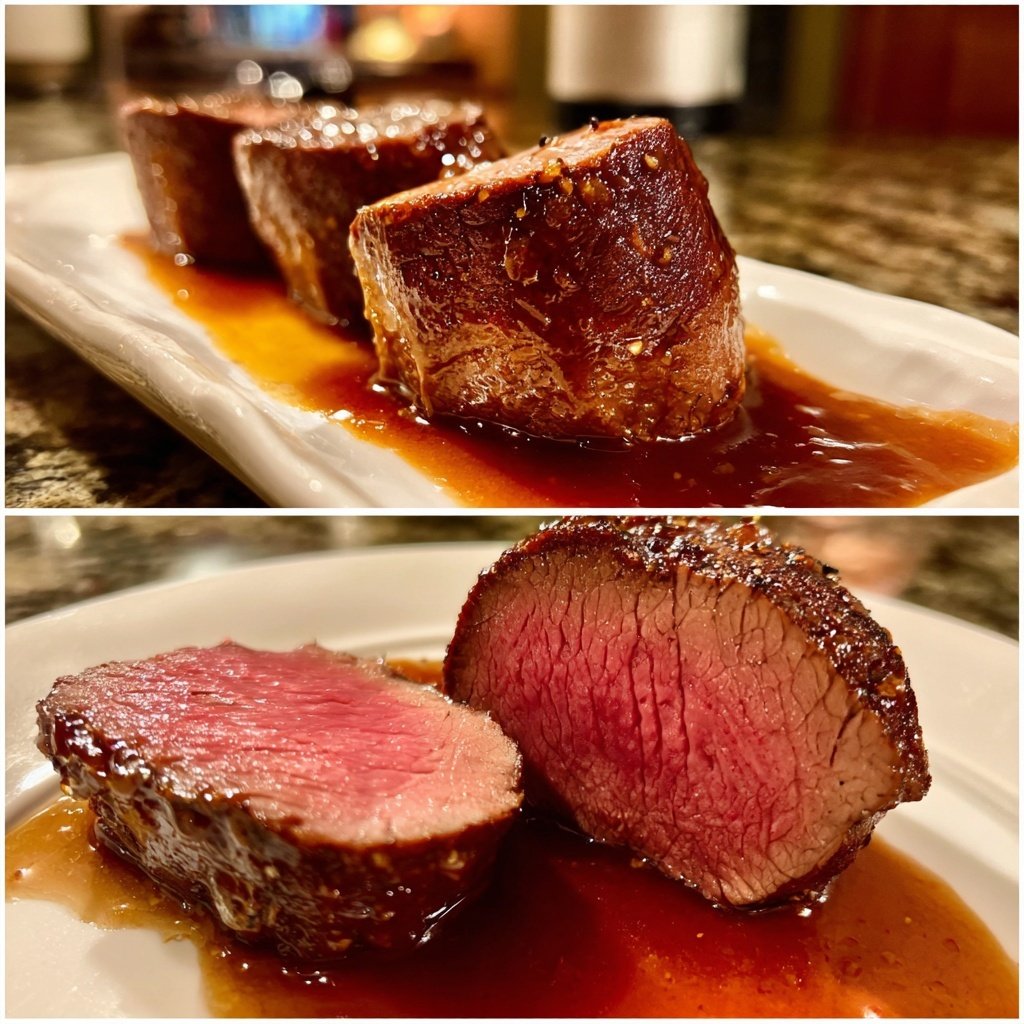
When I first tried making Beef Tenderloin with Fig Glaze, the combination of juicy beef and sweet, sticky figs took my culinary skills to a whole new level. I was amazed at how simple ingredients could create such a gourmet dish. The glaze adds a perfect touch of sweetness that beautifully complements the rich flavor of the tenderloin. I love serving this recipe for special occasions or family gatherings, as it always leaves a lasting impression and keeps everyone wanting more.
Experimenting with flavors is one of my favorite aspects of cooking, and this Beef Tenderloin with Fig Glaze was a delightful surprise for my taste buds. By combining fresh figs with balsamic vinegar and a hint of garlic, I created a glaze that enhances the natural richness of the beef. This recipe stands out not just for its taste but also for its elegant presentation, making it a favorite for dinner parties.
What I love most about this dish is how quickly it can be prepared. With just 20 minutes of prep and 25 minutes of cooking, I'm able to bring restaurant-quality flavors to my dining table without spending an entire afternoon in the kitchen. Plus, the leftovers—if there are any—are just as delicious, making this a recipe I return to time and again.
Why You'll Love This Recipe
- Rich, savory flavor elevated by the sweetness of figs
- A fantastic gourmet meal ready in under an hour
- Perfectly tender meat that melts in your mouth
Mastering the Perfect Sear
Achieving a perfect sear on the beef tenderloin is crucial for developing a rich flavor and beautiful crust. Use a cast iron or stainless steel skillet for even heat distribution, and ensure it's hot before adding the olive oil. Look for a shimmering surface on the oil, which indicates it's ready. Sear each side of the tenderloin for 3-4 minutes until you see a golden-brown crust forming. This browning reaction not only enhances the flavor but also locks in moisture, making your meat more succulent.
Avoid overcrowding the pan; if your skillet isn’t large enough, sear the tenderloin in batches. If you notice any sticking, gently lift the meat with a spatula rather than forcing it. Once properly seared, you should see that the meat releases easily from the pan. This technique not only ensures a great texture but also sets the stage for a beautifully glazed finish once you add the fig mixture.
The Role of Figs in the Glaze
Figs bring a unique sweetness and depth to the glaze that beautifully complements the beef. Their natural sugars caramelize during cooking, creating a sticky, glossy finish. When selecting figs, choose fresh ones that are plump and slightly soft to the touch, as these will yield the best flavor. If fresh figs aren't available, you can substitute with dried figs—just rehydrate them in warm water or balsamic vinegar for about 15-20 minutes before chopping.
Don’t rush the glaze-making process. Allow the fig mixture to reduce until it becomes syrupy. This not only intensifies the flavors but also ensures that the glaze clings to the meat rather than sliding off. You can adjust the sweetness by varying the amount of honey; just taste as you go to find the balance that works for you.
Serving Suggestions and Pairings
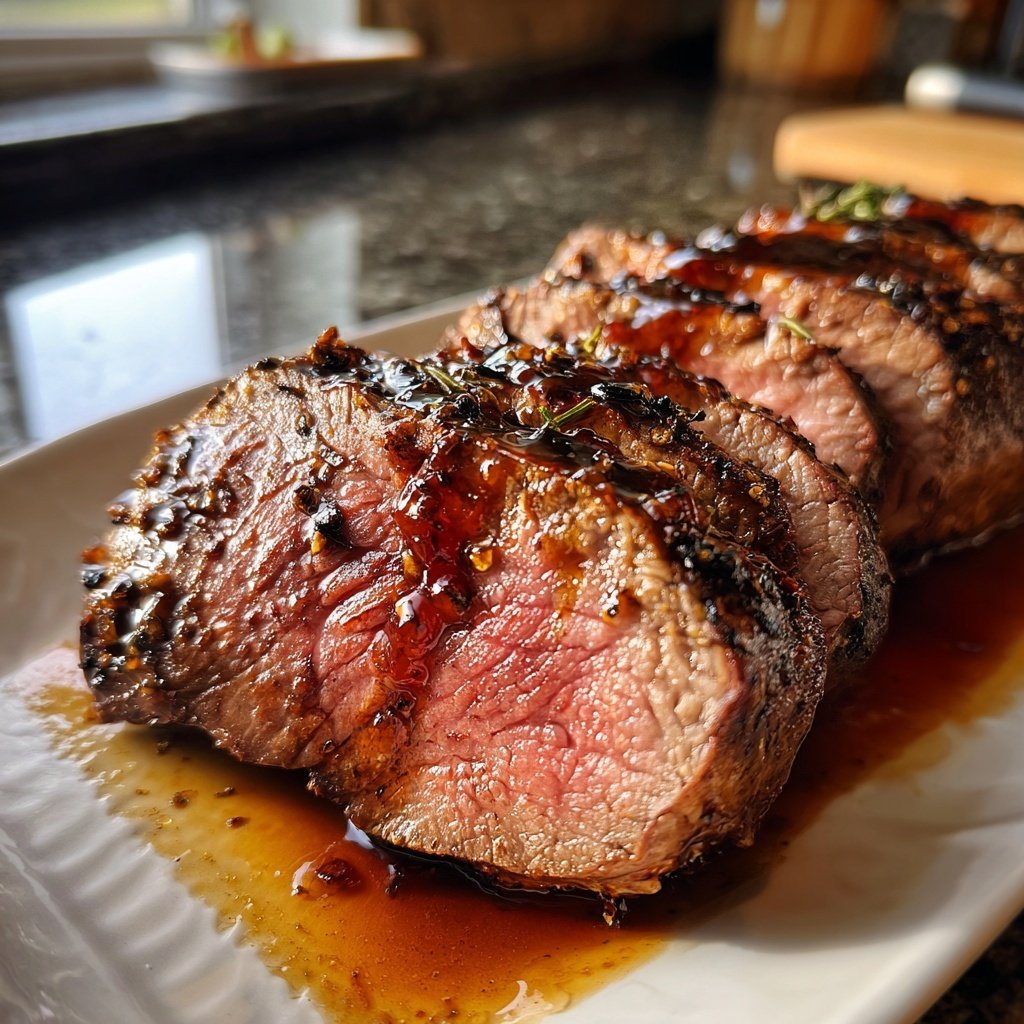
For an elegant presentation, slice the beef tenderloin just before serving, ensuring each piece reveals its pink, juicy center. Drizzle some extra fig glaze over the slices and consider garnishing with fresh thyme or a sprinkle of sea salt for an added flavor dimension. This dish pairs wonderfully with creamy sides such as garlic mashed potatoes or sautéed green beans to balance the richness of the beef.
If you have leftovers, store them in an airtight container in the refrigerator for up to three days. Gently reheat the slices in a skillet over low heat, adding a splash of stock or water to keep them moist. This dish can elevate not only dinners but also sandwiches or salads the next day, providing a gourmet touch to your meals.
Ingredients
Gather the following ingredients to create this delicious beef dish:
For the Beef Tenderloin
- 1.5 lbs beef tenderloin
- Salt and pepper, to taste
- 2 tablespoons olive oil
For the Fig Glaze
- 1 cup fresh figs, chopped
- 1/4 cup balsamic vinegar
- 2 cloves garlic, minced
- 1 tablespoon honey
- 1 tablespoon fresh thyme, chopped
Ensure all ingredients are fresh for the best results!
Instructions
Follow these steps to prepare your Beef Tenderloin with Fig Glaze:
Prepare the Beef
Preheat the oven to 400°F (200°C). Season the beef tenderloin with salt and pepper. In a large oven-safe skillet, heat the olive oil over medium-high heat. Sear the beef on all sides until browned, about 3-4 minutes per side.
Make the Fig Glaze
In a saucepan, combine the chopped figs, balsamic vinegar, minced garlic, honey, and thyme. Cook over medium heat until the figs break down and the mixture becomes syrupy, about 10 minutes.
Roast the Beef
Brush the fig glaze generously over the seared beef tenderloin. Transfer the skillet to the preheated oven and roast for about 15-20 minutes for medium-rare doneness. Use a meat thermometer to check the internal temperature (130°F to 135°F).
Rest and Serve
Once cooked, remove the beef from the oven and let it rest for 10 minutes before slicing. Serve with extra fig glaze drizzled on top.
Enjoy your gourmet meal!
Pro Tips
- For an enhanced flavor profile, marinate the beef tenderloin in a mixture of olive oil, garlic, and thyme for a few hours before cooking.
Make-Ahead Tips
You can prepare the fig glaze up to a day in advance. Store it in an airtight container in the refrigerator until you're ready to finish cooking the beef. This saves time on the day of serving and allows the flavors to deepen further. Just remember to warm it slightly before using, as the cold glaze won’t adhere as well to the hot meat.
When planning for a larger gathering, consider cooking multiple tenderloins. You can scale the glaze recipe accordingly and sear the meat in batches. Just be sure to use an oven-safe skillet that can accommodate the extra pieces, and monitor the internal temperature closely, as larger cuts may require slightly more cooking time.
Troubleshooting Common Issues
If your beef tenderloin isn't browning properly, it might be too cold or the pan isn't hot enough. Always allow your meat to rest at room temperature for 30-60 minutes before cooking, which aids in even cooking. Furthermore, ensure the pan is adequately preheated before adding the oil—this is key to achieving that beautiful sear.
Should the glaze turn out too thick, simply add a splash of water or more balsamic vinegar while it’s still warm to achieve the desired consistency. Conversely, if it's too thin, cook it a bit longer to allow more moisture to evaporate. Keeping these simple adjustments in mind can help ensure a perfectly executed dish every time.
Questions About Recipes
→ Can I use dried figs instead of fresh?
Yes, you can use dried figs. Just chop them and add a little water to the glaze to achieve the right consistency.
→ How do I know when the beef is done cooking?
Use a meat thermometer to check the internal temperature. For medium-rare, remove the beef from the oven at 130°F to 135°F.
→ Can I prepare the glaze in advance?
Absolutely! The fig glaze can be prepared a day ahead and stored in the refrigerator. Just reheat it before using.
→ What sides pair well with this dish?
Roasted vegetables, mashed potatoes, or a fresh salad complement the beef tenderloin beautifully.
Beef Tenderloin with Fig Glaze
Created by: Gemma Hollis
Recipe Type: Fusion Kitchen
Skill Level: Intermediate
Final Quantity: Serves 4
What You'll Need
For the Beef Tenderloin
- 1.5 lbs beef tenderloin
- Salt and pepper, to taste
- 2 tablespoons olive oil
For the Fig Glaze
- 1 cup fresh figs, chopped
- 1/4 cup balsamic vinegar
- 2 cloves garlic, minced
- 1 tablespoon honey
- 1 tablespoon fresh thyme, chopped
How-To Steps
Preheat the oven to 400°F (200°C). Season the beef tenderloin with salt and pepper. In a large oven-safe skillet, heat the olive oil over medium-high heat. Sear the beef on all sides until browned, about 3-4 minutes per side.
In a saucepan, combine the chopped figs, balsamic vinegar, minced garlic, honey, and thyme. Cook over medium heat until the figs break down and the mixture becomes syrupy, about 10 minutes.
Brush the fig glaze generously over the seared beef tenderloin. Transfer the skillet to the preheated oven and roast for about 15-20 minutes for medium-rare doneness. Use a meat thermometer to check the internal temperature (130°F to 135°F).
Once cooked, remove the beef from the oven and let it rest for 10 minutes before slicing. Serve with extra fig glaze drizzled on top.
Extra Tips
- For an enhanced flavor profile, marinate the beef tenderloin in a mixture of olive oil, garlic, and thyme for a few hours before cooking.
Nutritional Breakdown (Per Serving)
- Calories: 380 kcal
- Total Fat: 26g
- Saturated Fat: 15g
- Cholesterol: 195mg
- Sodium: 85mg
- Total Carbohydrates: 32g
- Dietary Fiber: 3g
- Sugars: 24g
- Protein: 6g